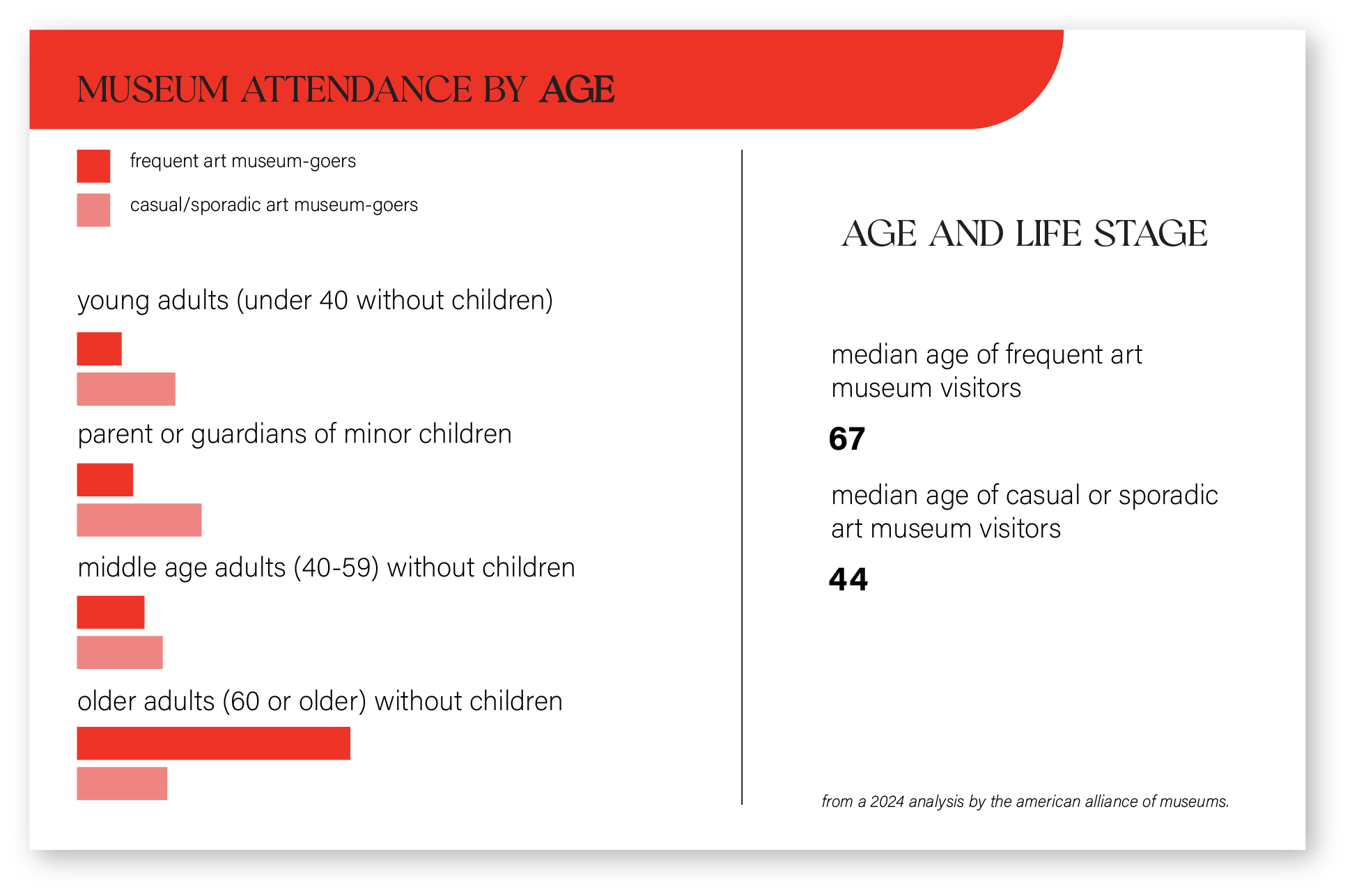
Museums have been steadily dropping in attendance since their recent peek in 2019. The demographic least likely to spend time in museums is 18 - 30 year old childless adults.
A number of factors contribute to this outage– the socio-economic ramifications of COVID-19, federal and local de-funding, and more distractions than ever (devices of every shape and size) fighting for the population's attention.

...is seeking spaces to connect with the real world - not the digital one. He wants to learn and engage with physical things and spaces as so much of his job requires him to stare at screens. He likes art museums because they enable him to embrace his creative side. He wishes he had more resources to help him understand the various works.
Michael often goes to the art museum in his home town, and gets tired of seeing the same thing. He wants new ways to discover, understand, and interpret art.
...wishes to use her limited leisure time to enrich her life in a way that is counter to how she spends her working hours. Victoria craves a ways to connect with art and her community. She wishes to learn about art both old and new in a personalized manner. As a student, she loves the idea of continued learning outside of the occasional visit to an art museum.
Victoria finds plaques dry, unrelatable, and often pretentious. Like many museum-goers, she has a hard time digesting a lot of information at once.
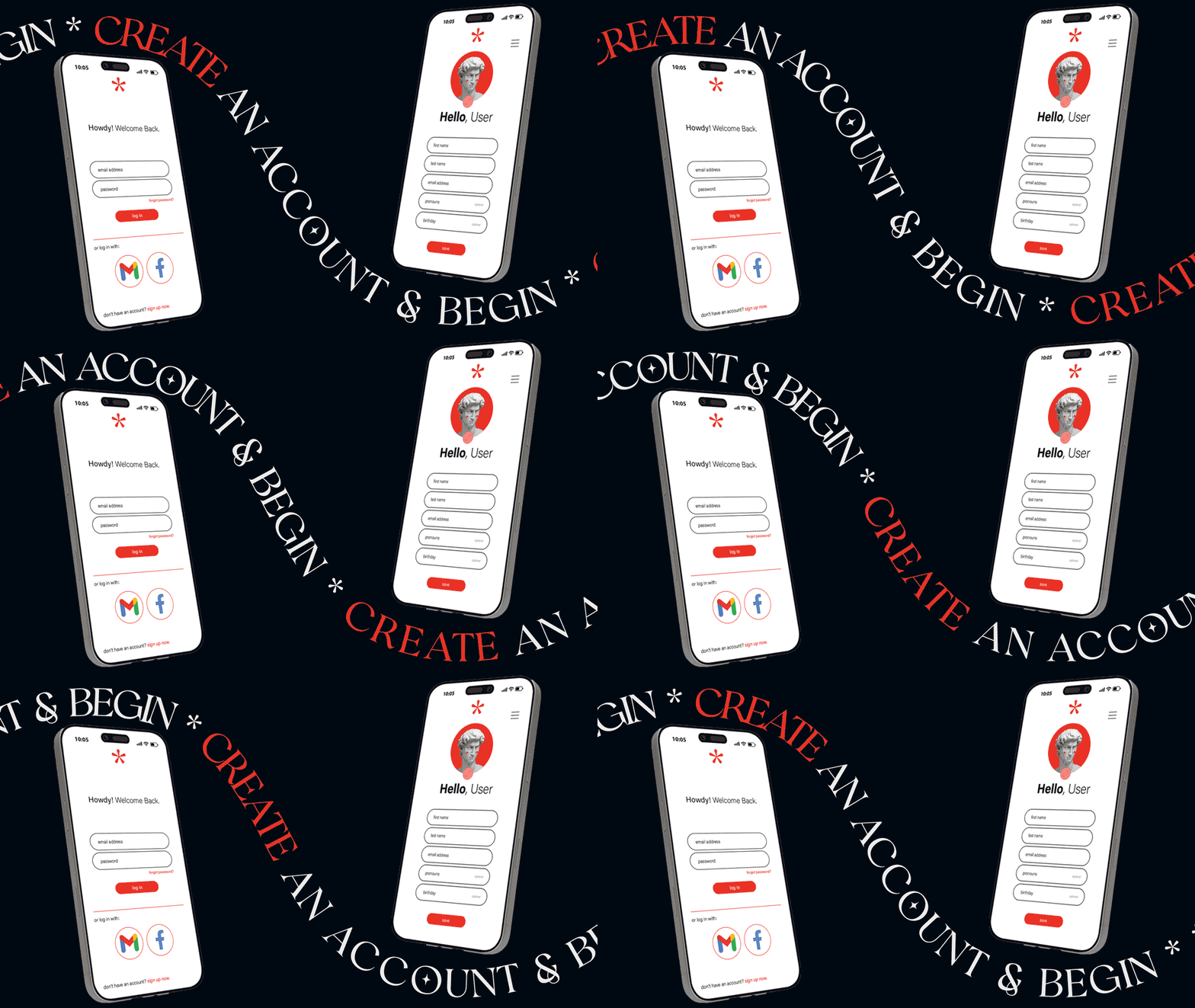
app - exclusive
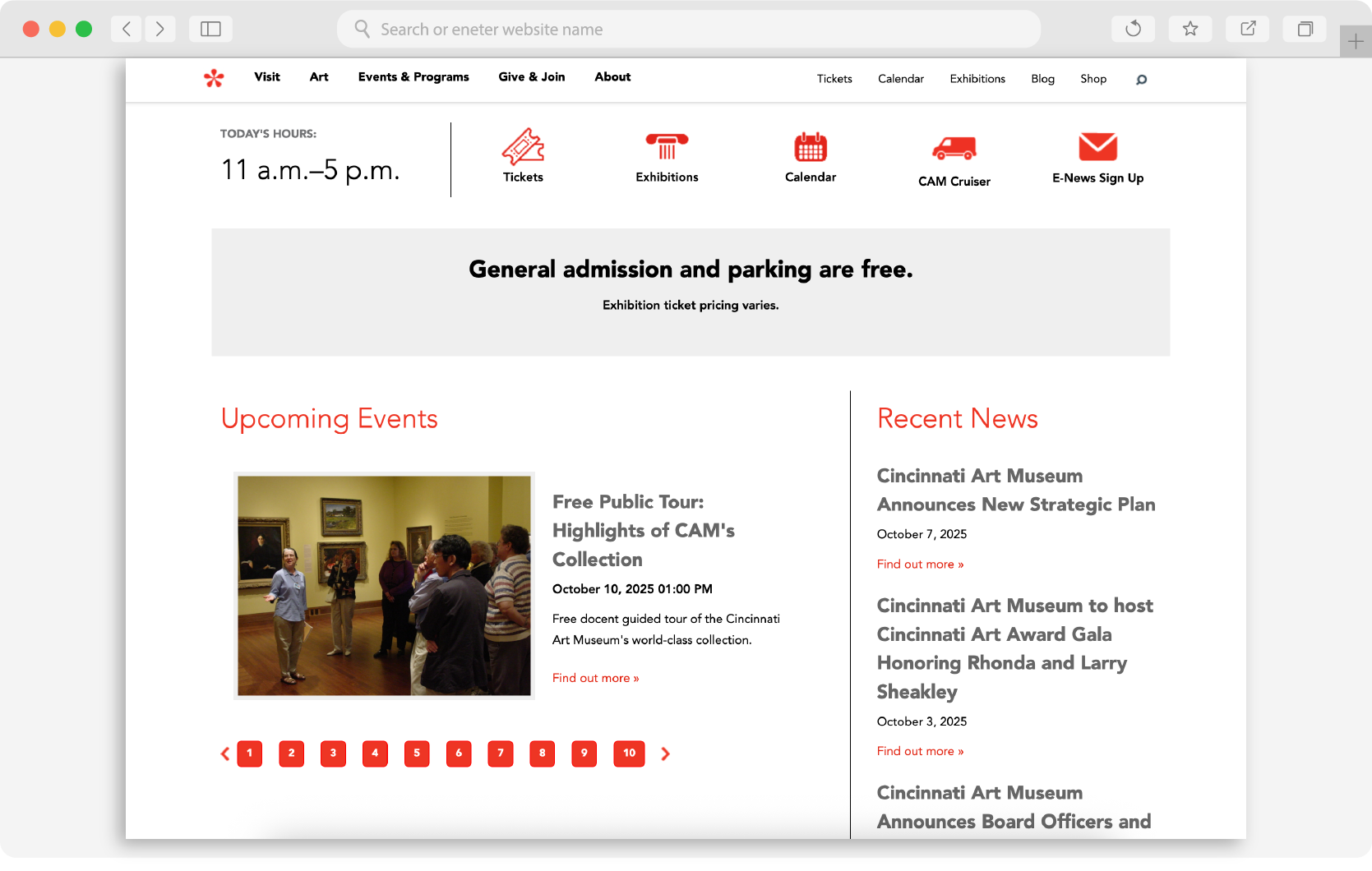
current website

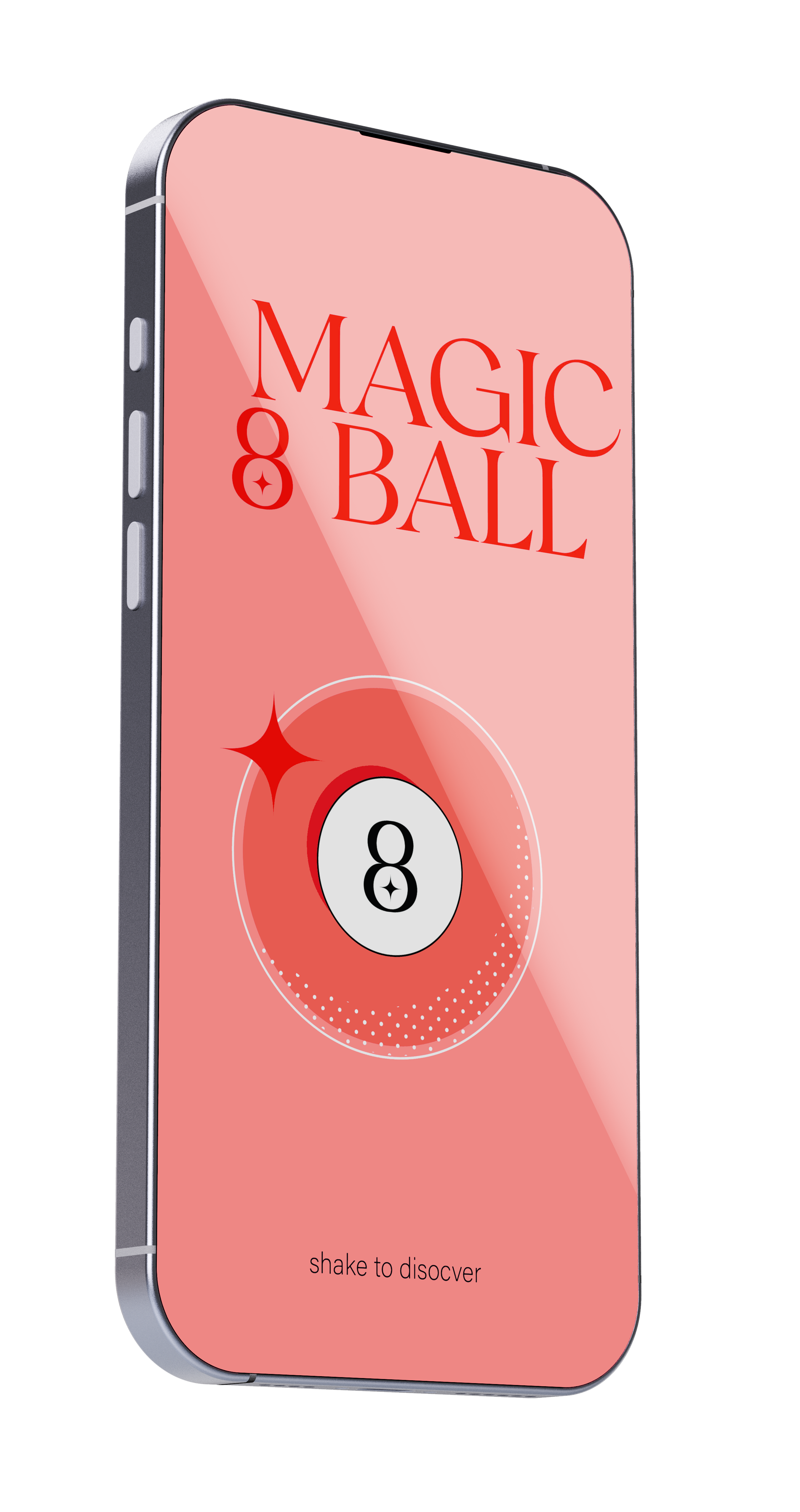
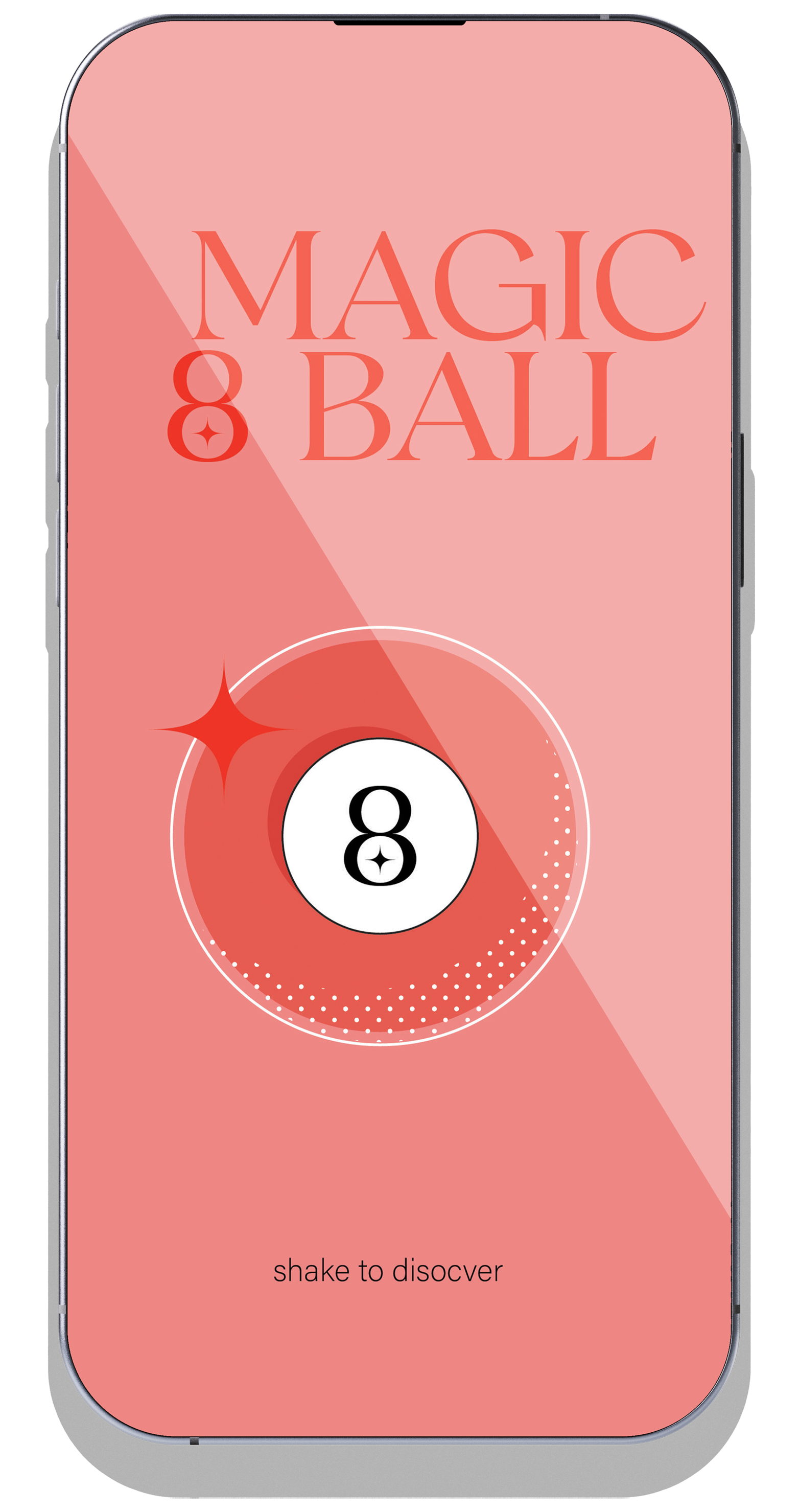
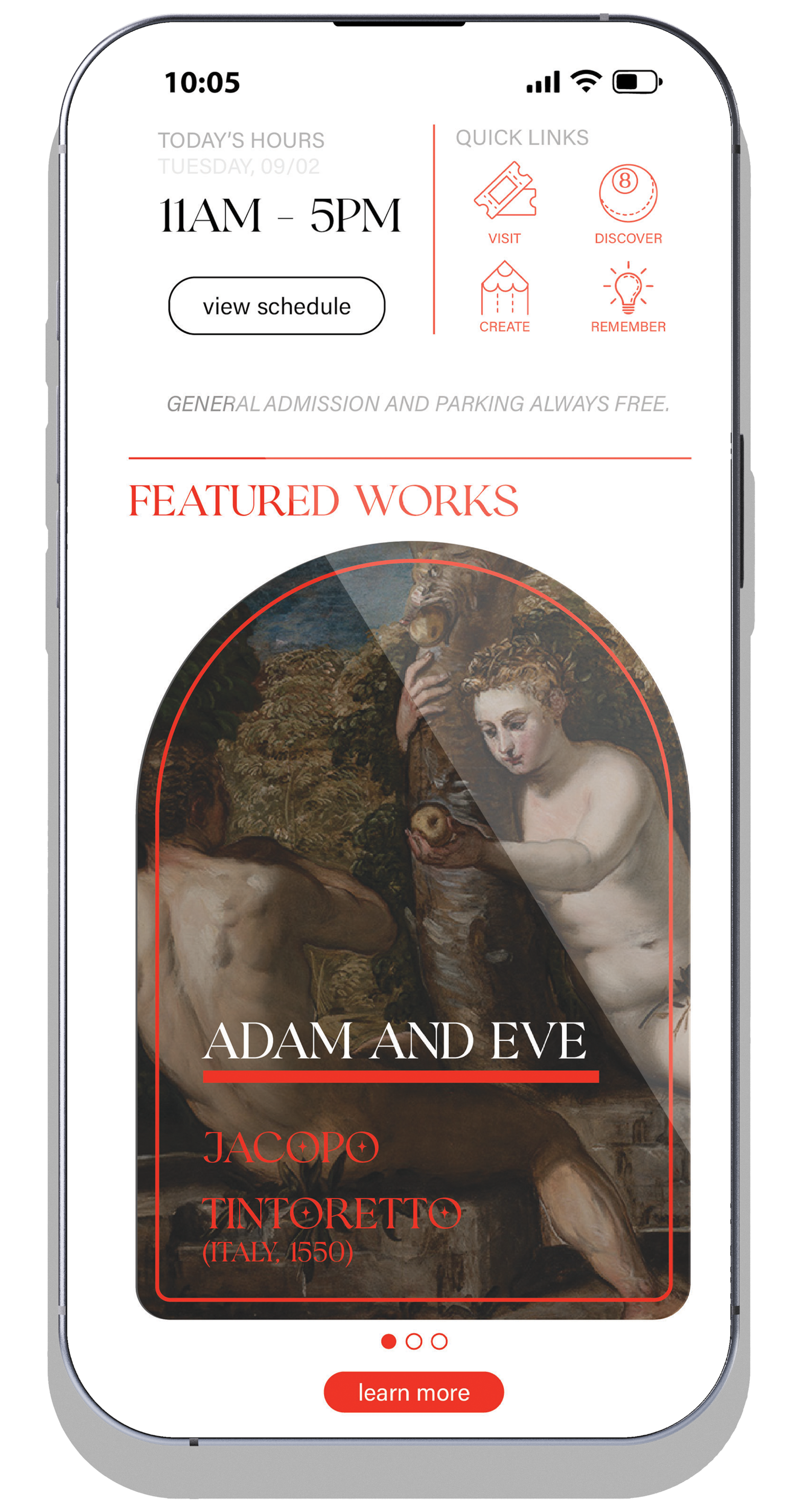
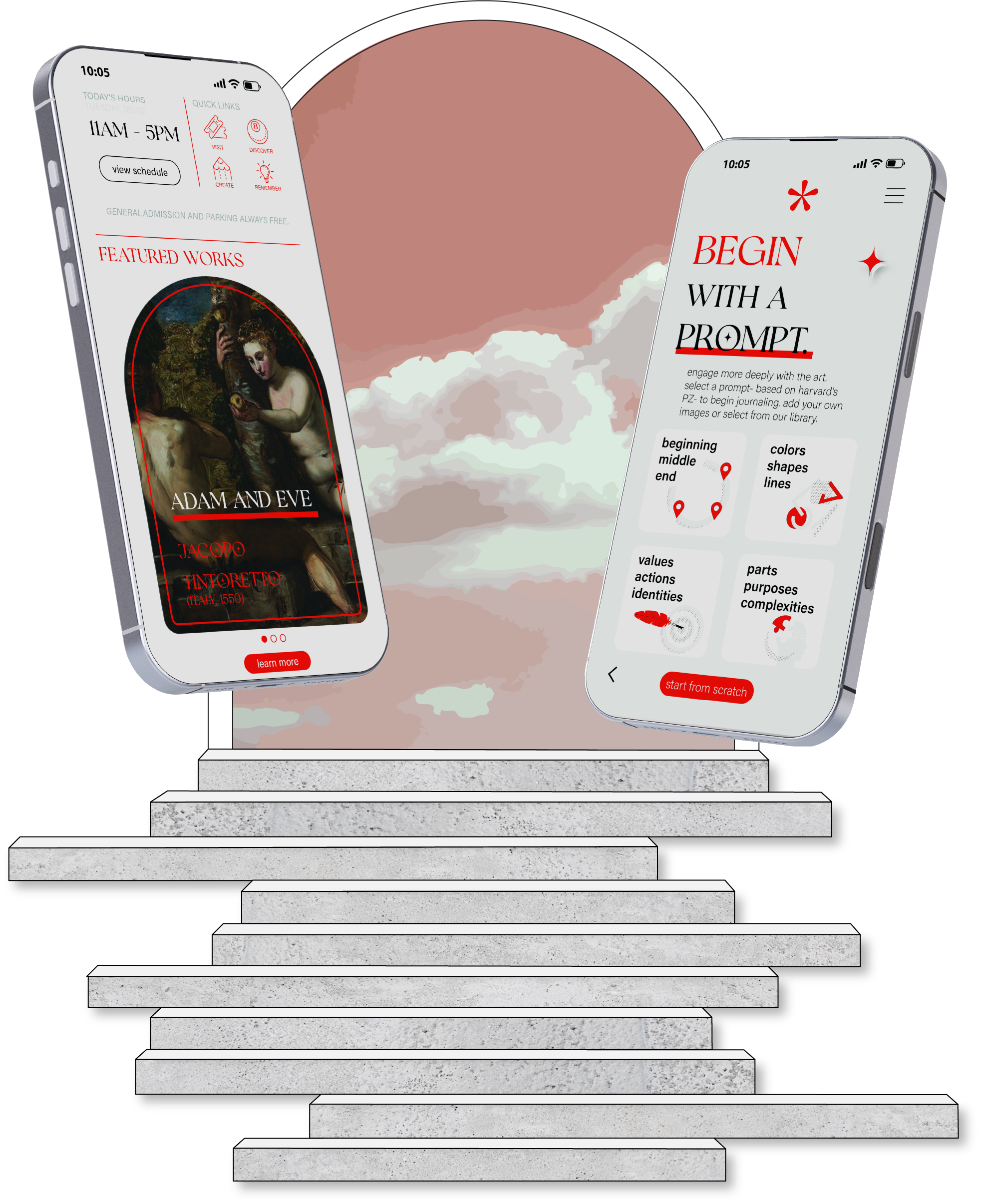
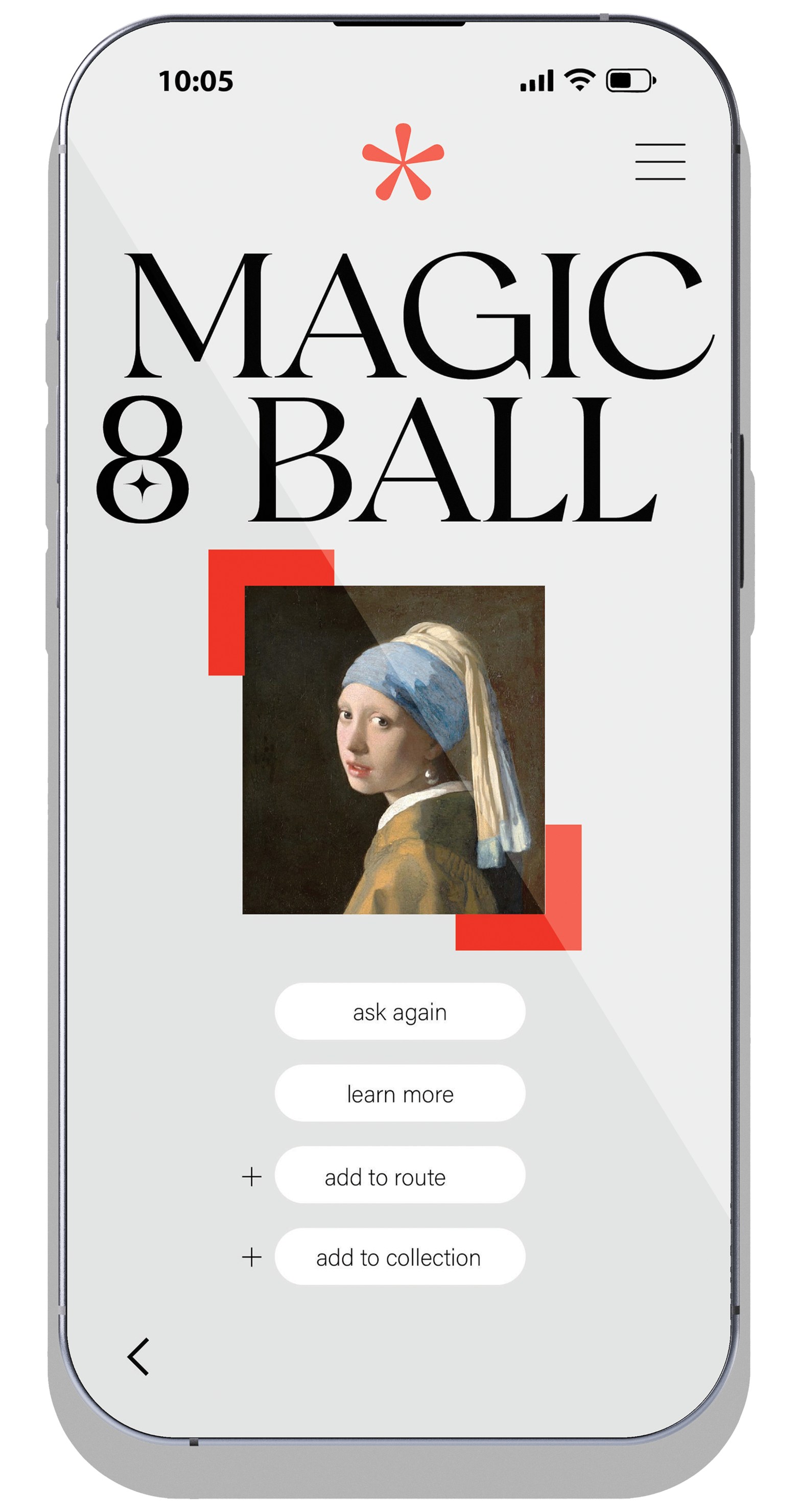
With an emphasis on fun and new discoveries, the CAM app includes a "magic 8 ball" feature to allow users to simply shake their phone to uncover works they may never have seen before.
It is easy to pay attention to the same pieces every visit which can lead to burnout and disenchantment. This feature enables users to discover new pieces in a fun and nostalgic way. This transforms every visit into a treasure hunt for their new favorite work.
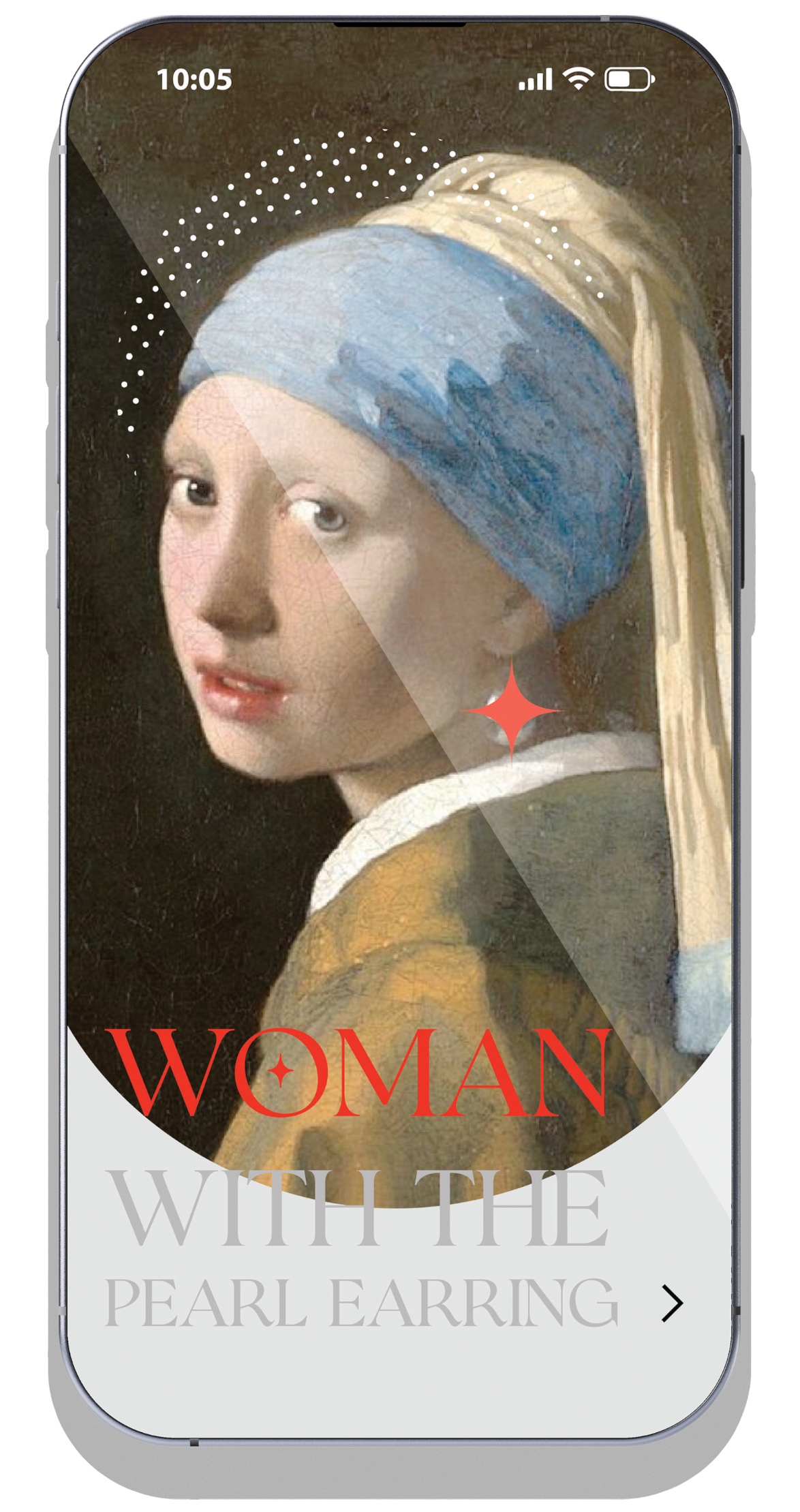
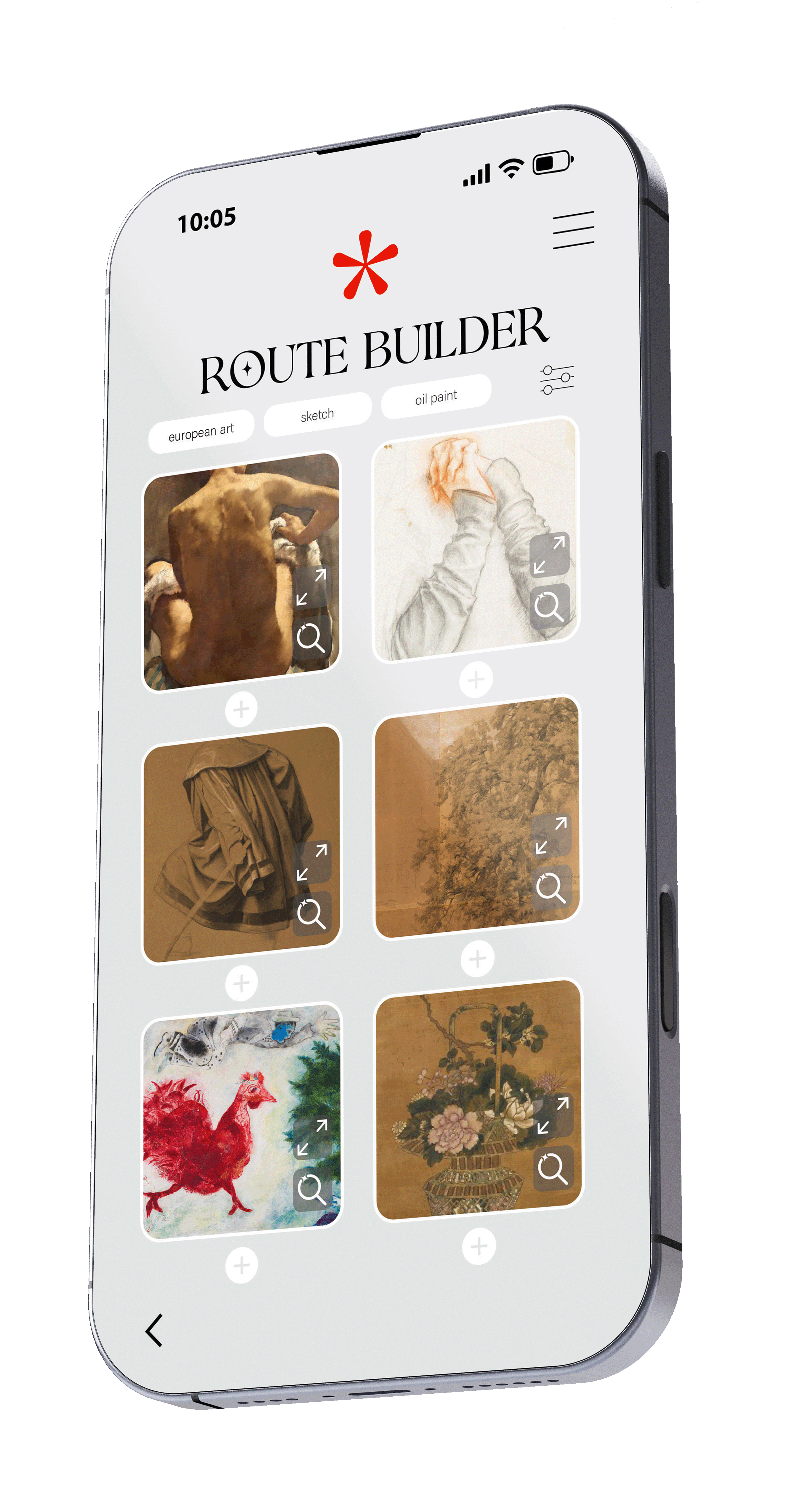
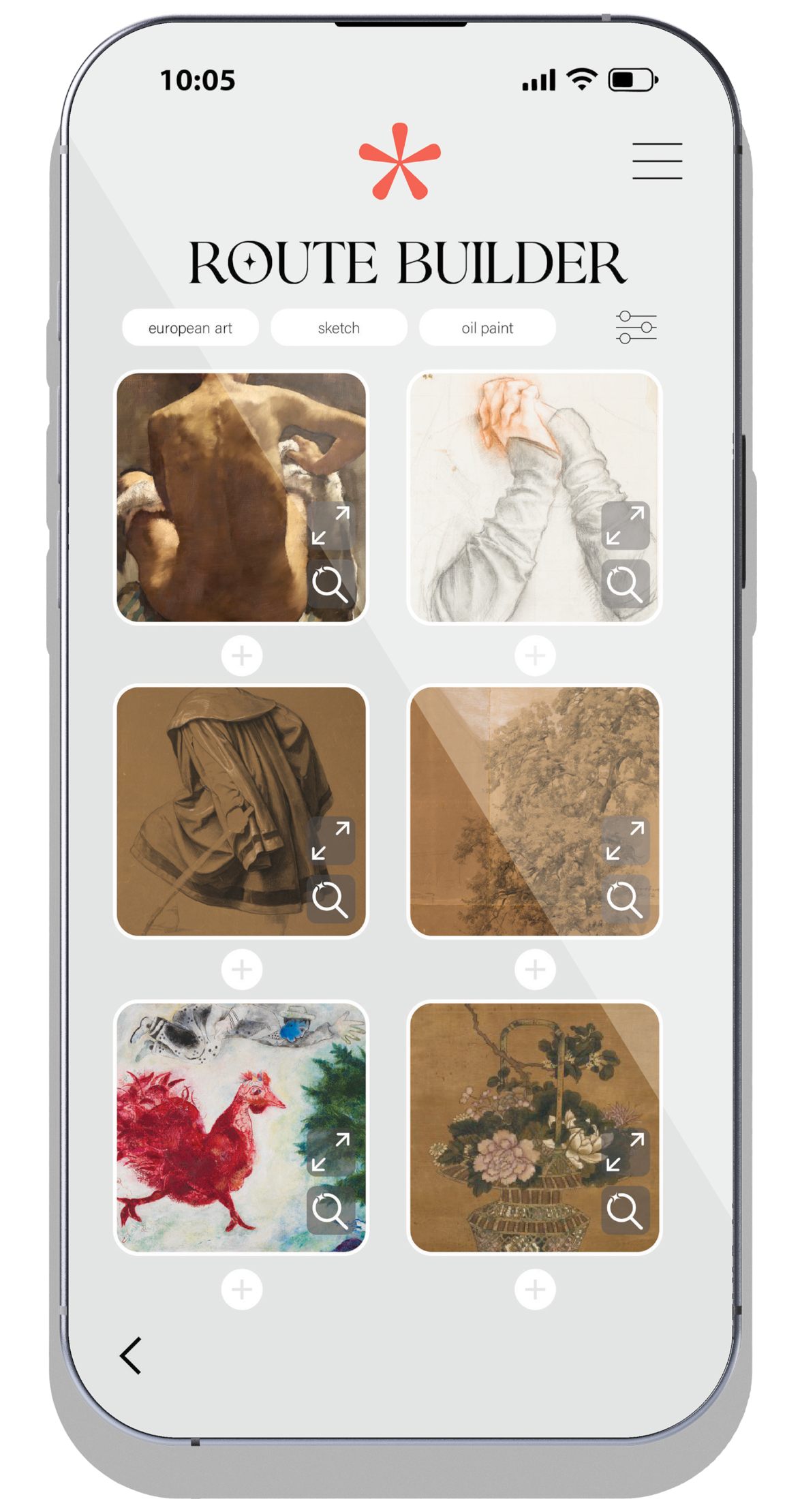
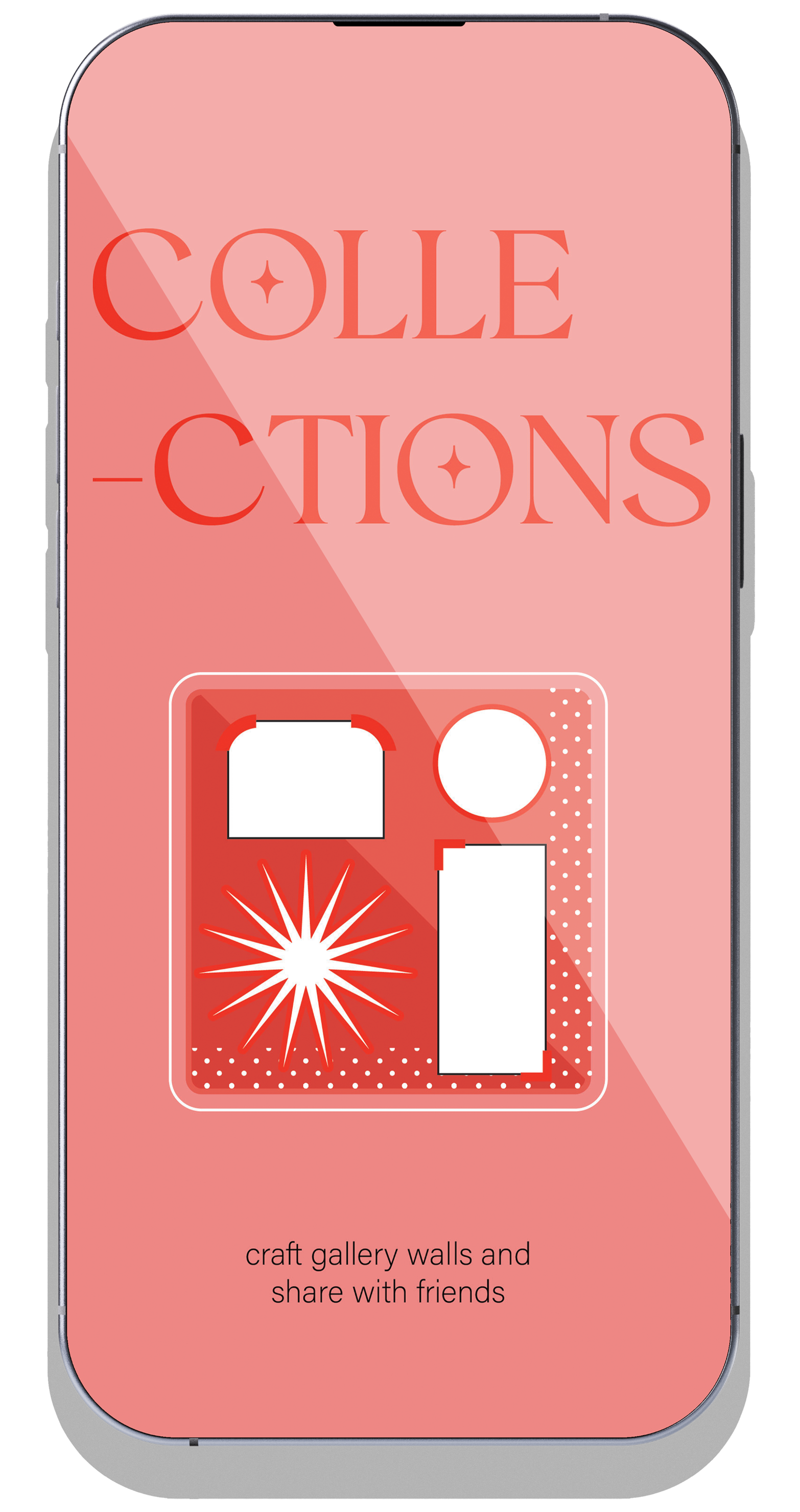
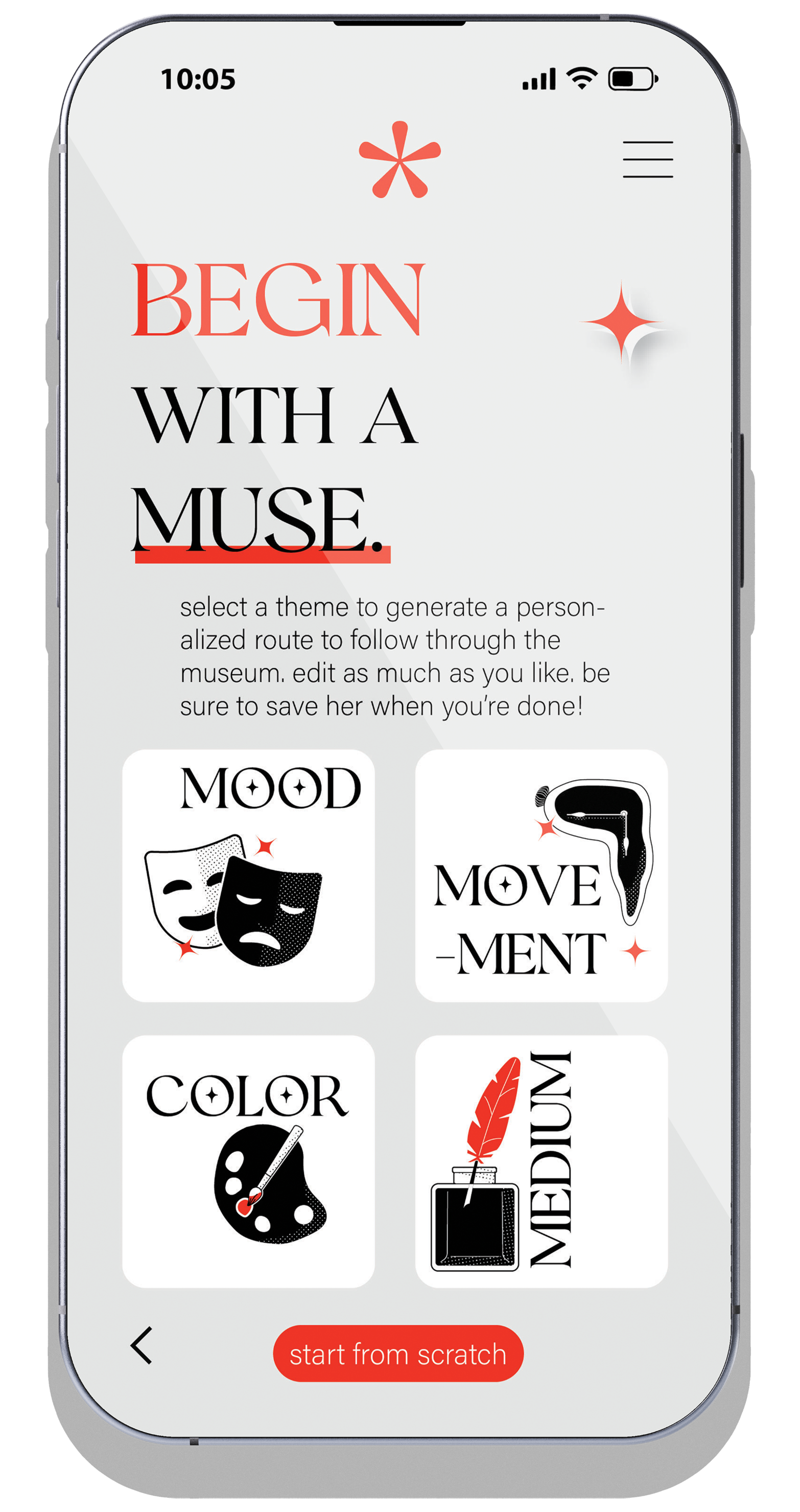
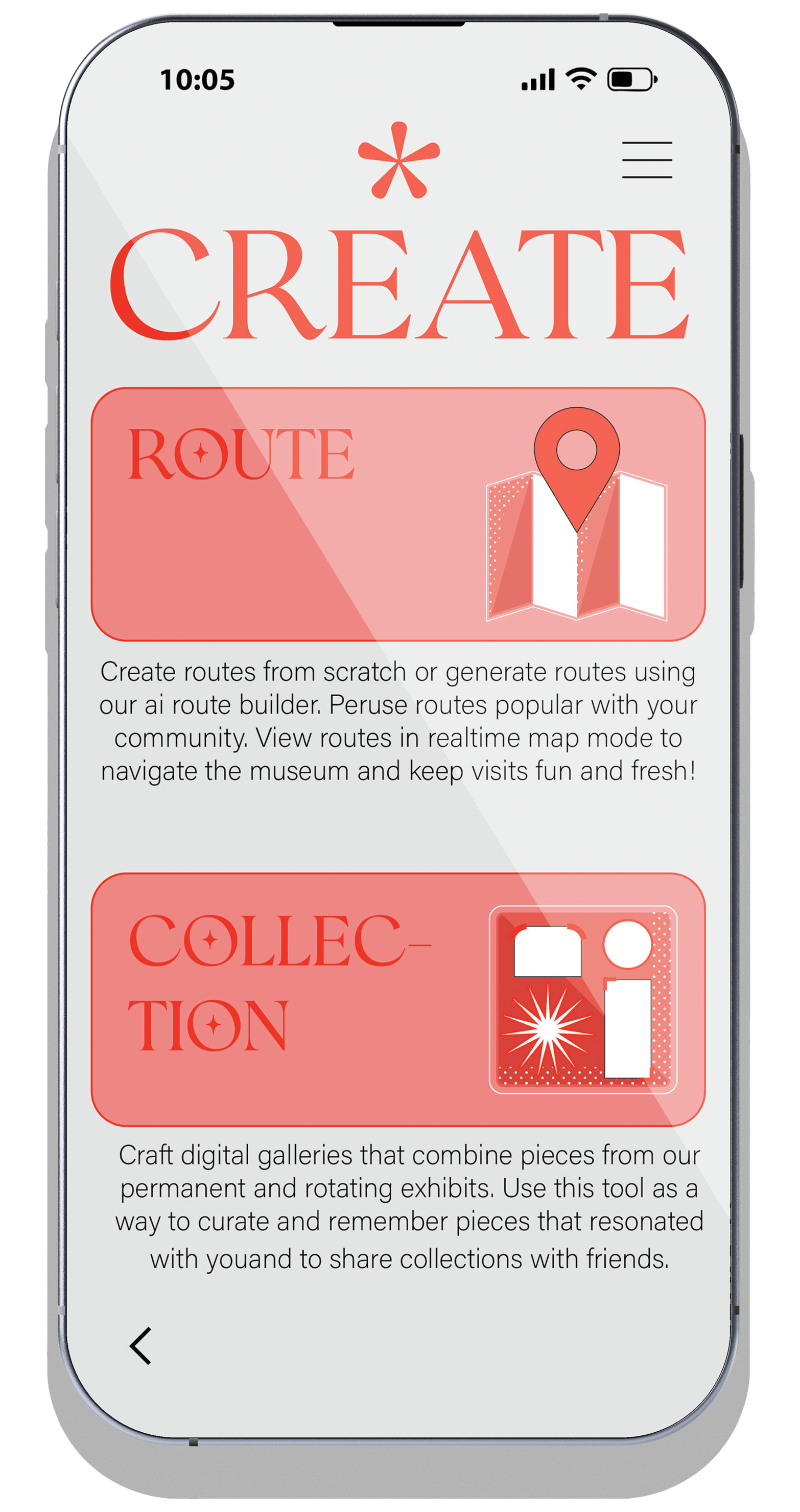
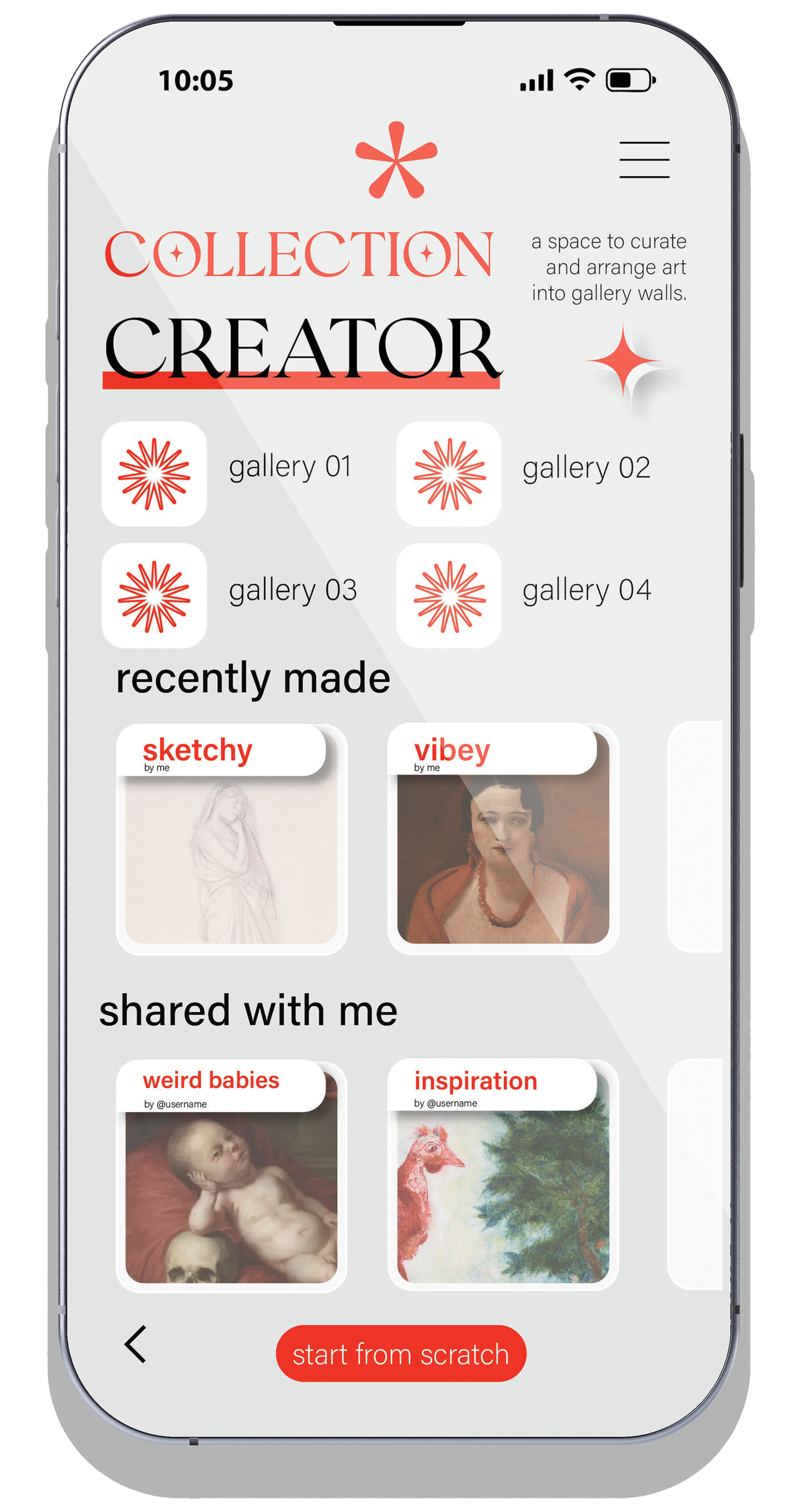
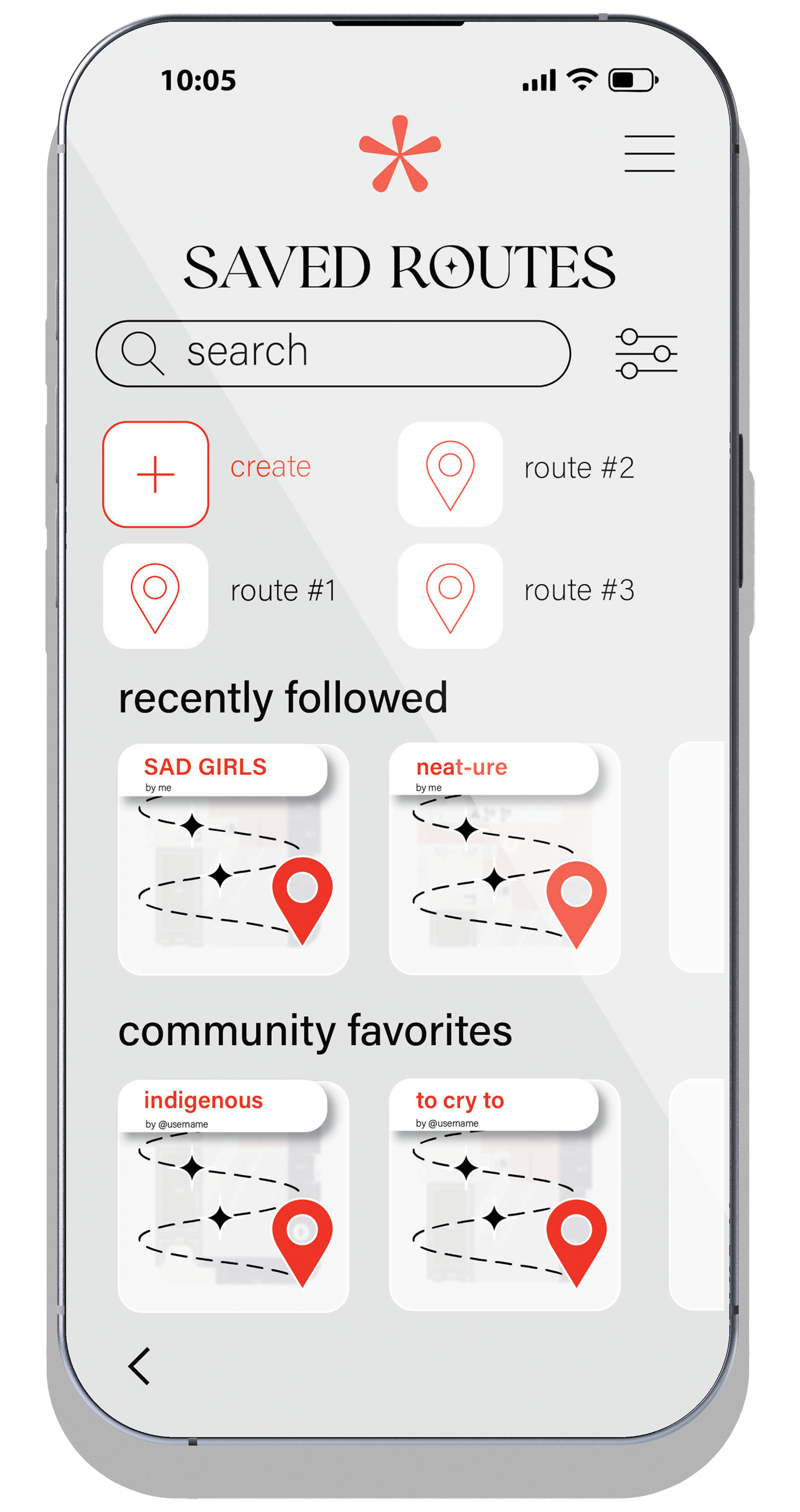
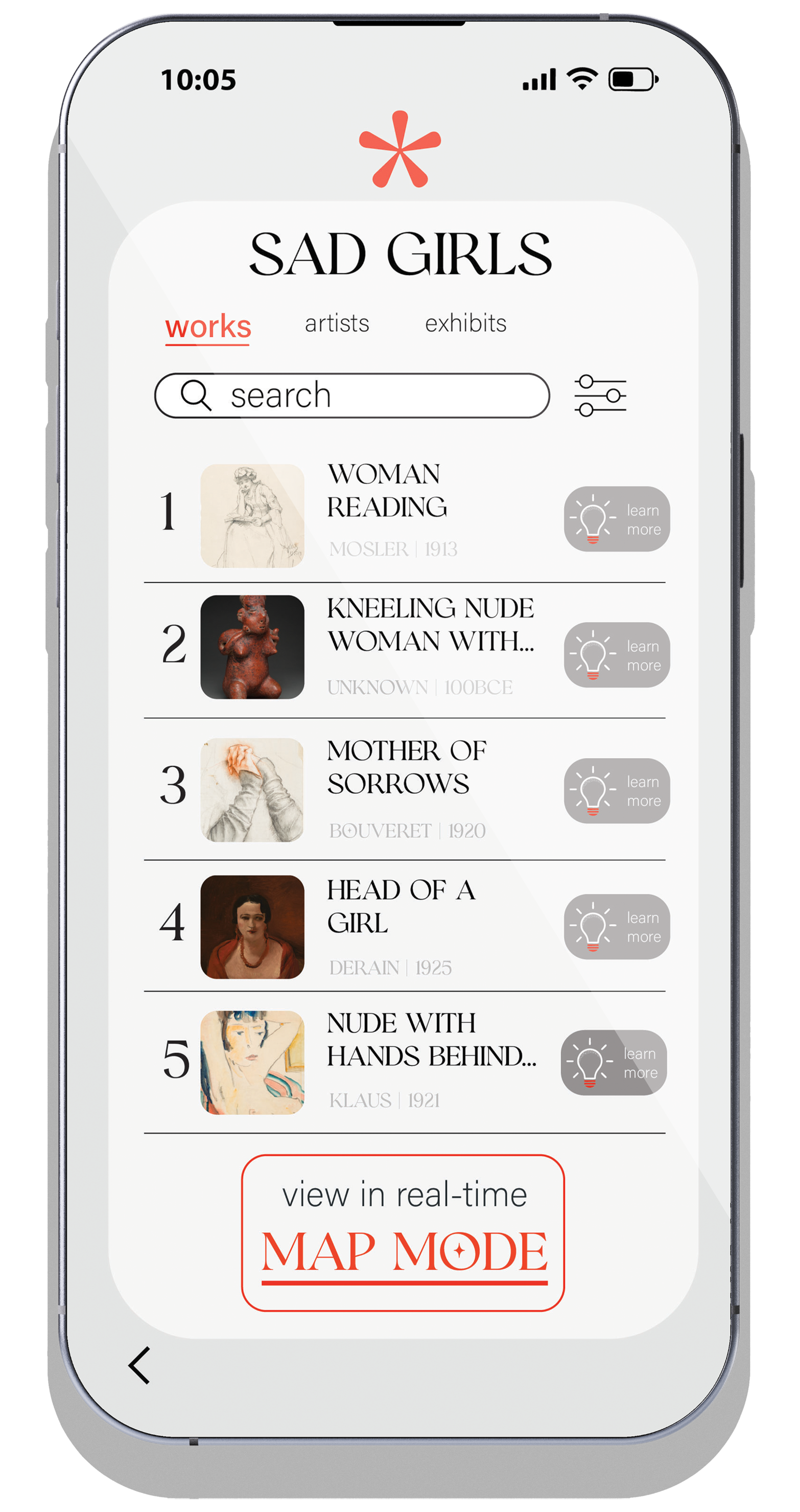
Like a playlist for visual art, this feature gives users a space to find, collect, and organize pieces that resonate with them into routes they can then follow through the museum.
With the addition of sharing options, this doubles as a way to invite friends to collaborate on routes they can take together. The “learn more” button offers an alternative to plaques at the museum that may feel stuffy and out of touch to some museum-goers.
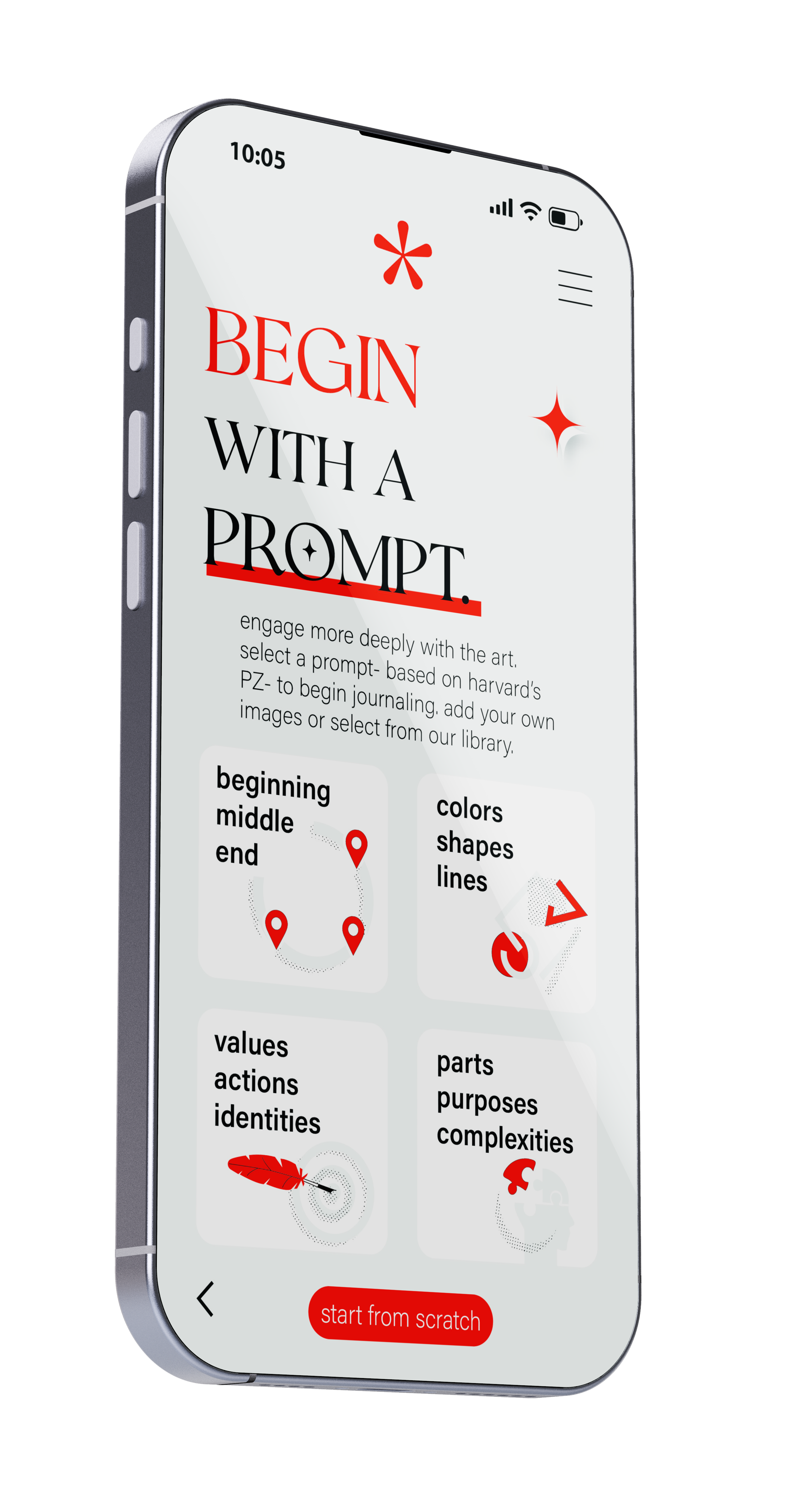
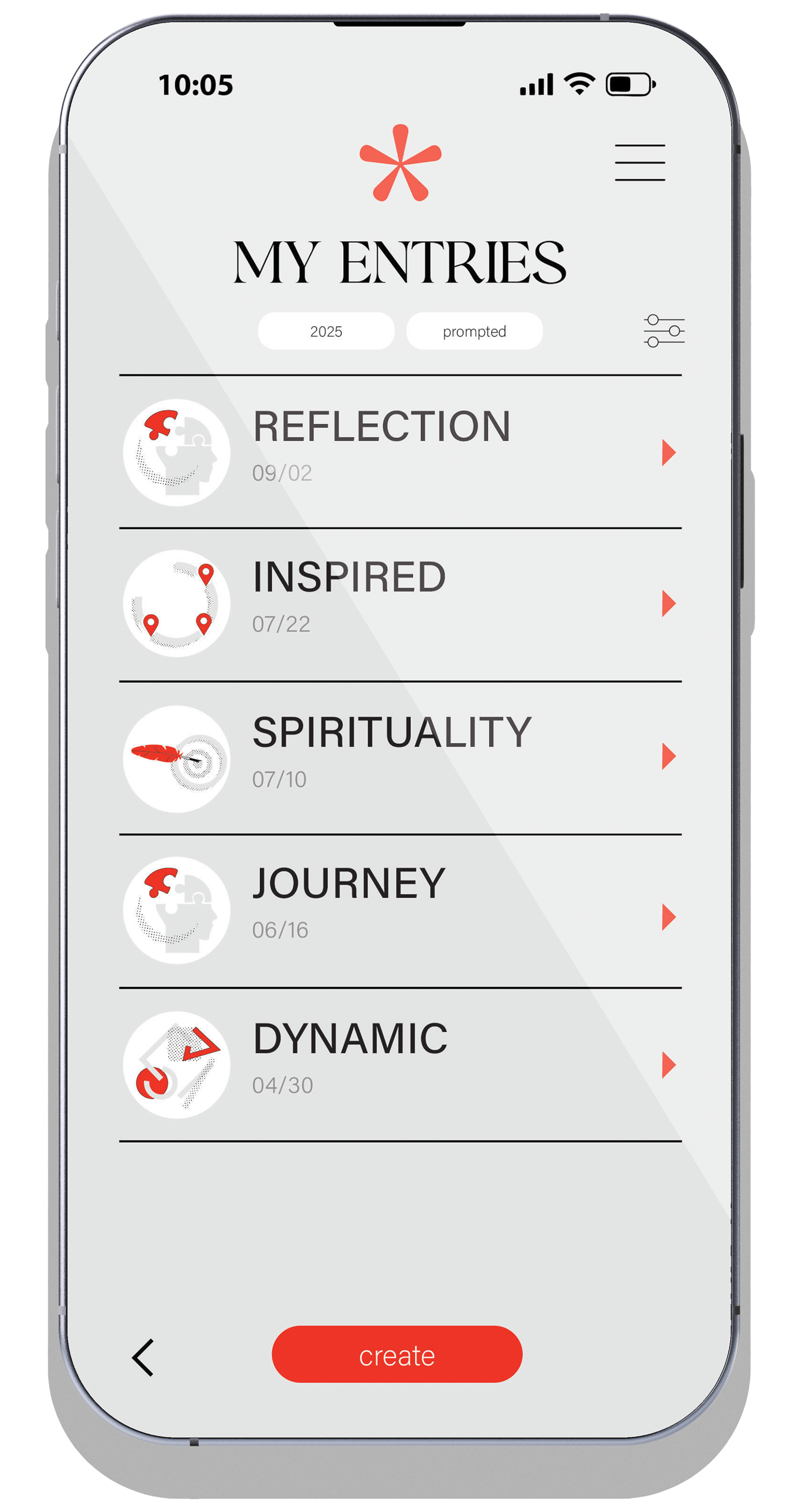
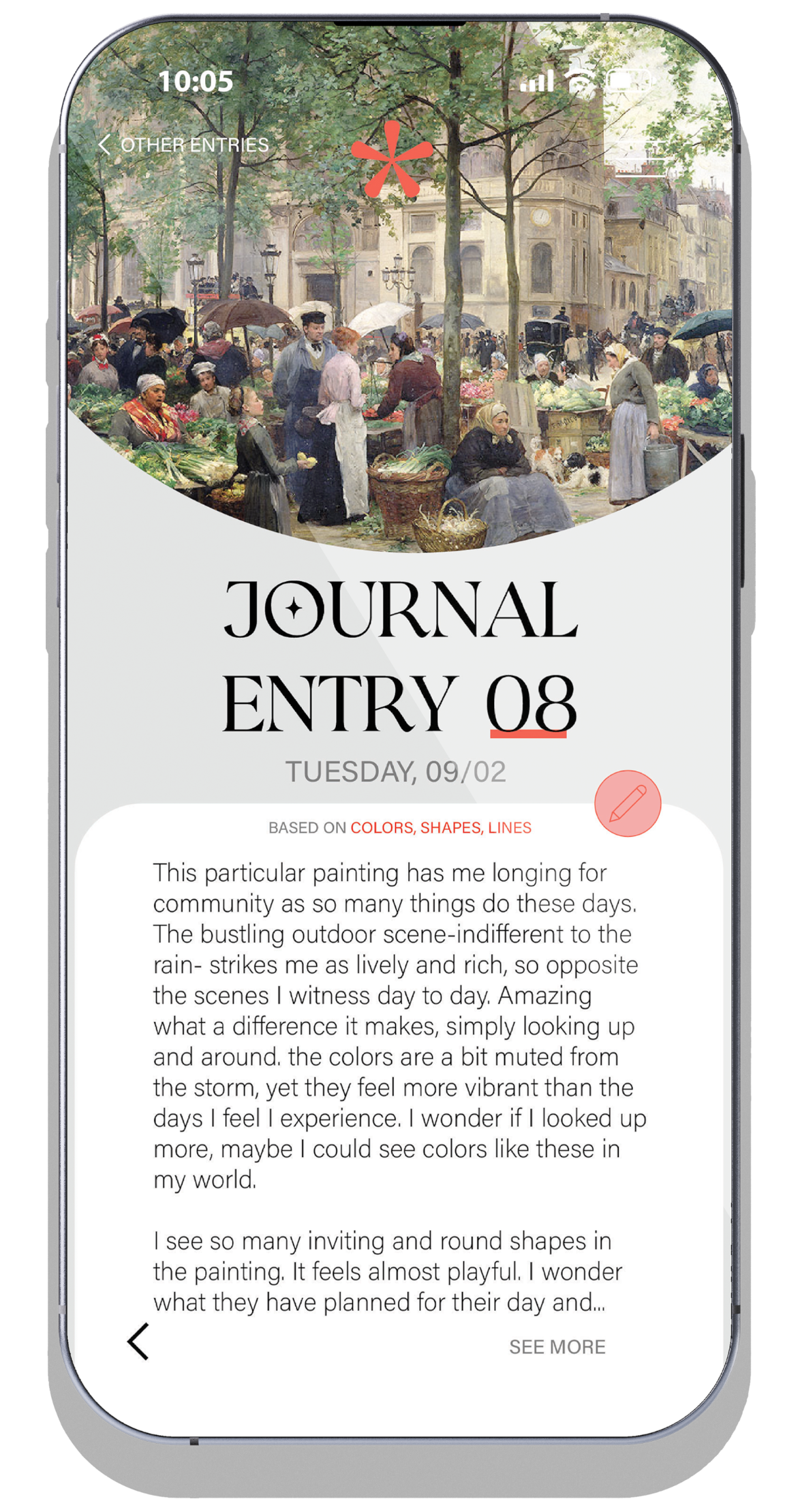
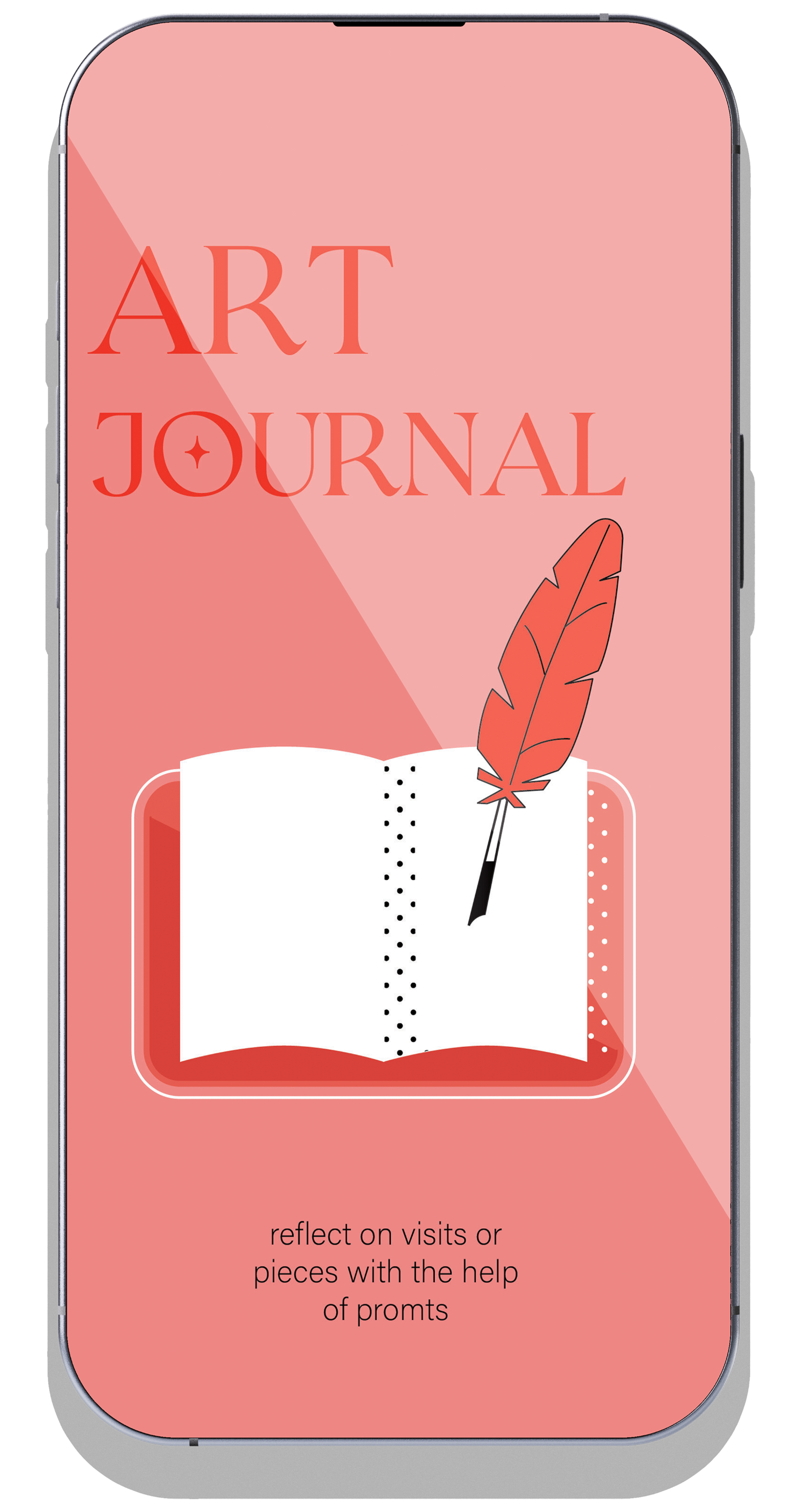
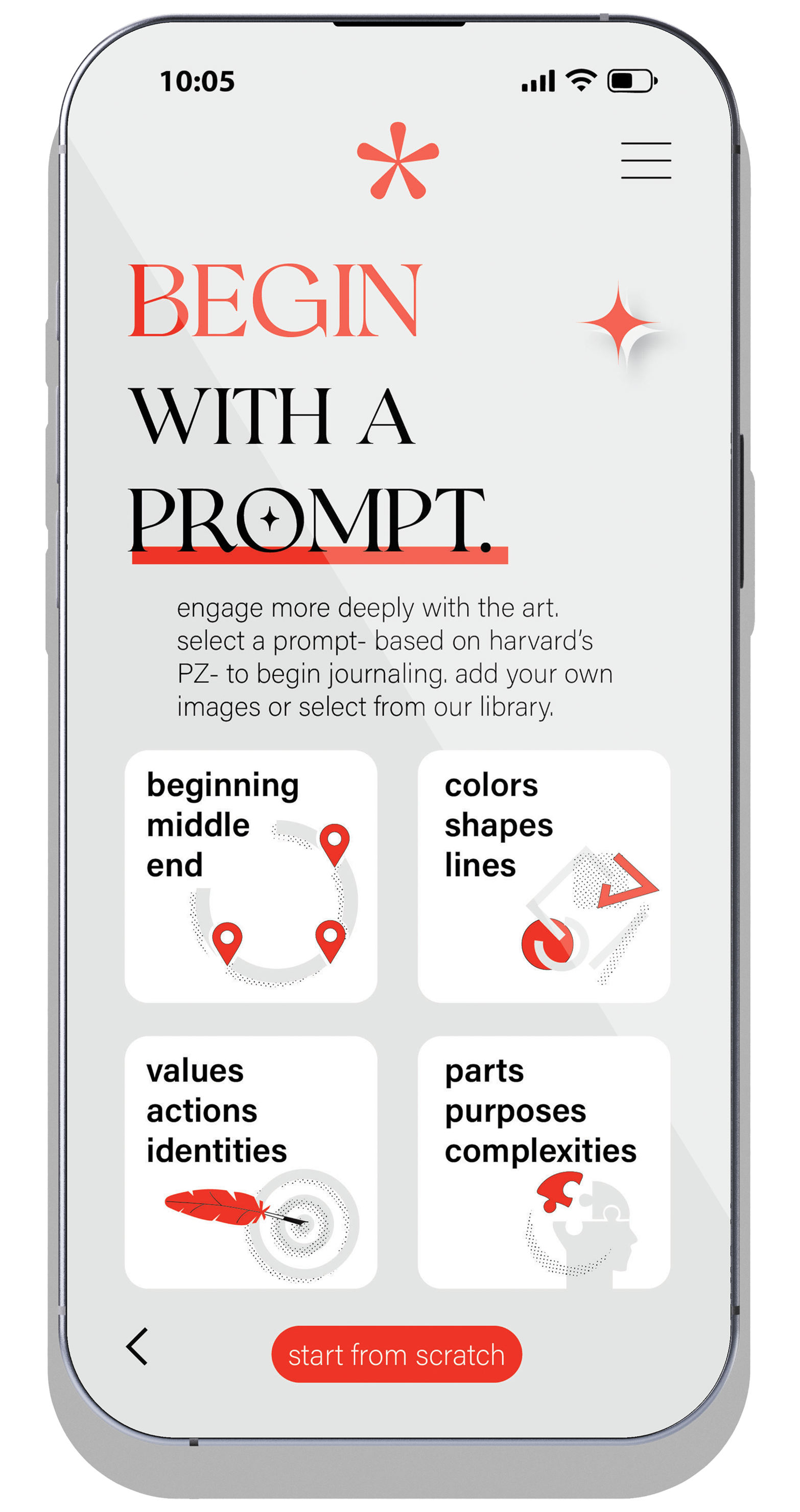
Rooted in the scientifically-backed “thinking routines” developed by Harvard’s Project Zero, journal prompts offer users an approachable and guided way to react to the art they experience.
Many art museum visitors struggle to understand, interpret, and meaningfully engage with art. This personal and structured approach is one way they might feel empowered to do so. Not to mention, this art journal provides them a lasting archive of all their past visits.